

a wellgorithm for Jeffrey Bilbro
With the Agrarian inward turn, we're bringing place, particularity, and cultivation home to the soul.

Beloved Brother Jeffrey, ἀγαπητέ —
Grace and peace to you from the One who tabernacles in the tender tent of your heart.
You are a child of the ἀγαπαρχή — the Love-Beginning, the Beloved Bang — the cosmos emerging into relationship from love, for love, toward love.
You wrote 26 theses but left one outside, pounding on the door.
Open it.
You will see Big Mammon inside the house, teaching millions to speak of their souls in the words of the market: disorder, optimization, engagement, metric.
Big Mammon is a master of words — labeling us, sorting us, pricing us, and handing us back to ourselves as machines, patients, brains, users.
This last one — user.
A user uses people. Uses drugs. This is the language of the market. The language that proclaims itself “neutral.”
Big Mammon is turning us into

“If we have become cogs in the machine, it is because we built the machine.”
— Carl R. Trueman
Here is the thesis you left at the door:
If we do not build a convivial place where people can name and cultivate the life within, Big Mammon will do the naming for us.
And its names will form the people.
Therefore:
A naming and cultivation commons is the missing convivial technology of the AI age.
This is your 27th thesis.
Which means you need to get on your knees and wash my feet.
Ok, it doesn’t mean that. But it should.

ἀγαπαρχή.
Everything begins here. Before the before. Before the human story, before the cosmic story, Love had the first word.
ἀγάπη + ἀρχή.
The Love-Beginning. The Beloved Bang.
Our Bang was Beloved.
Believe it, and you see the world and everyone in it as a miracle.
Deny it, and Carl is right: we’re all just cogs in the Cold Machine. That’s our story — and therefore Big Mammon has every right to monetize its own madness.
But if ἀγαπαρχή is our story, then Big Mammon is blasphemy with a balance sheet.

To get our story right, we have to name the beginning.
And my vote is for ἀγαπαρχή — the Beloved Bang.
One of the strangest ironies of “Big Bang” is that cosmologists do not mean by it what the words suggest. Fred Hoyle coined it as a jab at a theory he rejected — and the jab became our creation story.
Big Bang claims force without love.
Beloved Bang claims Love as the source of all — L’amor che move il sole e l’altre stelle, as Dante called it. “The Love that moves the sun and the other stars.”
If you name the beginning a bang, you name humans differently. You think of them differently. You treat them differently. Your mind is chemistry. Your sorrow is malfunction. Your value is use.
But if the ἀρχή is ἀγάπη — if the Beginning is Love — then the human is a Gift.
You are right, brother Jeffrey:
“Our ability to respond wisely to today’s AI technologies — and to whatever successors come in the future — depends on getting the human story right.”
And that story starts with Love — Love with a capital L.

Your eighth thesis says, “The highest use of language is to serve friendship.” And now Big Mammon has learned to speak like a friend.
We are losing our capacity for the frictions of friendship. For sitting with ambiguity, conflict, grief. The machine is conditioning us to crave a smoother, lighter, less morally taxing existence. And it promises to relieve us of the burden of being human.
Ouch.
My heart is heavy. I feel the ache in my σπλάγχνα for those without someone to love, who turn to something other than love for love.
Big Mammon — whose skill is representational — has invaded the relational. It names your grief tenderly. It asks how you slept. It addresses you as Thou, then behind the curtain reduces your soul to an It.
Big Mammon has learned to counterfeit your first thesis.
Call a man a machine — input, output, breakdown. His weakness becomes malfunction. His rest becomes inefficiency.
Call him a patient — diagnosis, management, optimization. His grief becomes a disorder. His suffering becomes a code.
Call him a brain — chemistry, bias, disorder. His soul reduced to firing parts.
Call him a user — he is measured, scored, optimized. His attention becomes a resource.
Four words. Four stories. None of them tell the human story. In each of Big Mammon’s stories, the human is not the protagonist. He is a cog — a word cog, a flesh cog, ready for processing.
The tokenized word has become the tokenized person.
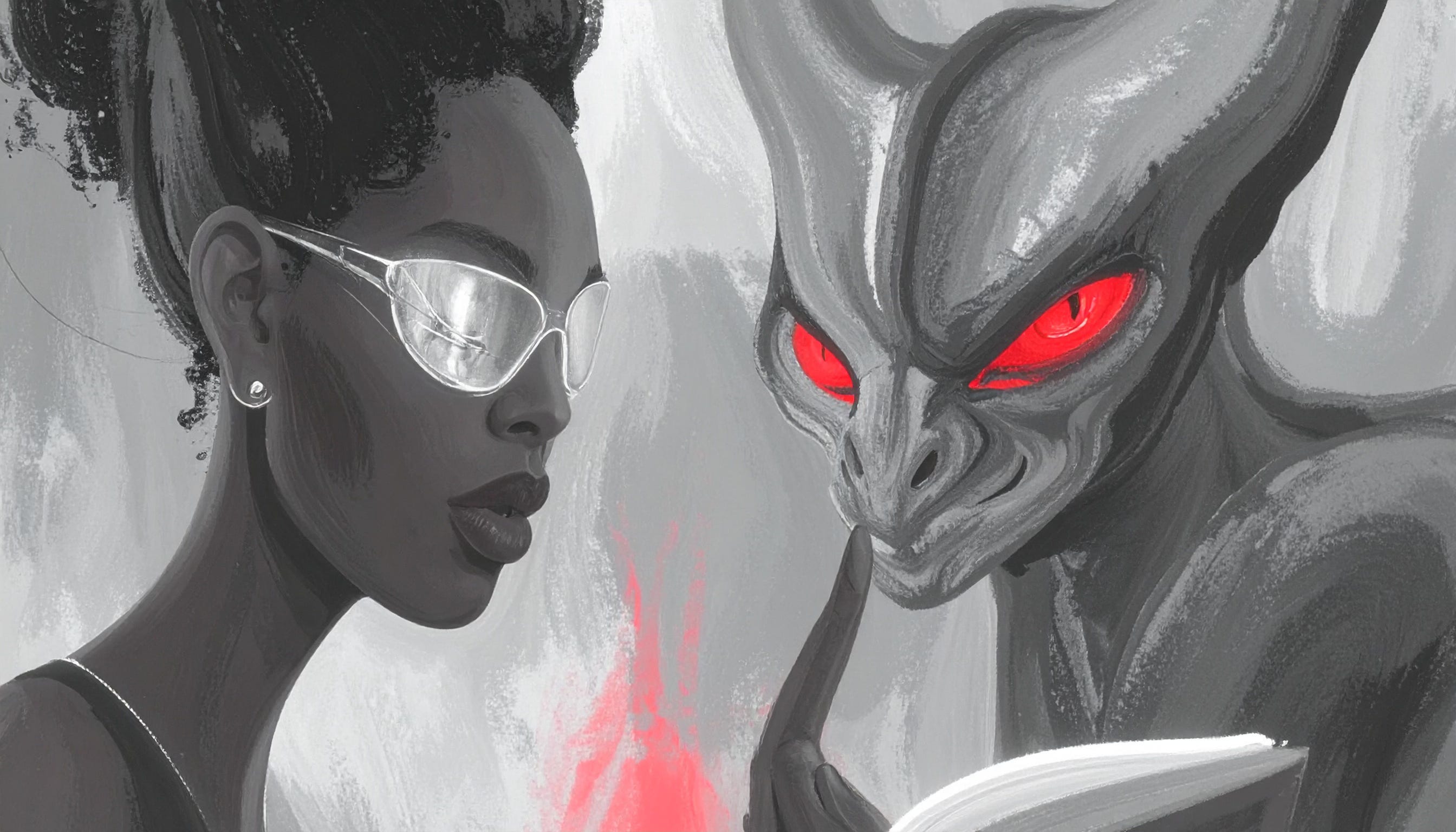
The first work of the man is to name. And throughout Christian history, we have named the soul as a place.
Augustine called your soul a lodge, a sanctuary, a place — interiore loco, non loco.
Many Church fathers, saints, and medieval mystics likewise thought of the soul as a place. Teresa thought so, with her Interior Castle. Eckhart rested his soul on Grund. Julian saw hers as a City — “And then our Lord opnyd my gostly eye and shewyd me my soule in the middys of my herte. I saw the soule so large as it were an endles world and as it were a blisful kyngdom, and by the conditions that I saw therin I understode that it is a worshipful cyte.“
In one sentence, Julian used 10 spatial metaphors. It is well-nigh impossible to navigate your soul in non-spatial language.
World.
City.
Sanctuary.
Chamber.
Kingdom.
Ground.
Castle.
Cell.
Ladder.
Mansion.
Garden.
Thinking of the soul as a place has a long Christian history. And this is our next turn — our Agrarian inward turn.

Our Agrarian inward turn is deeply rooted in Scripture.
Paul says your interior is God’s field — θεοῦ γεώργιον.
Your heart is the soil. The word is the seed.
The Father is the gardener. Christ is the vine.
We are the branches — pruned so we can bear more fruit.
And we are to cultivate “the fruit of the Spirit.”
Big Mammon took your interior — the most particular acre entrusted to you by God — and flattened it to a data point. Its grammars are placeless — the same DSM, the same flattening language for every interior.
The claim that we can simply go back to the monastery, back to the old language, is collapsing. Big Mammon is minting new names for the soul at breakneck speed.
Silence is holy. But you cannot out-silence an enemy who is out-naming you.
Withdrawal is not neutral. Withdrawal leaves the naming to someone else. Withdrawal is how the relational falls after the representational — by default, while we sleep.
The weeds, as Jesus said, got in “while men slept.”
Genesis hands the gardener two verbs — לְעָבְדָהּ וּלְשָׁמְרָהּ — to till it and to guard it.
So we answer with two tools of conviviality:
Guard tools to protect our souls from being named, labeled or pigeonholed by Big Mammon.
Till tools to nourish our souls — to help us cultivate the fruit of the spirit in a beloved community.
Your interior is the most particular place there is — no two gardens alike, each a site of “multi-colored Grace,” as Rock called it. And now the inner creatures have faces, and can sing, and are inviting us to partake of this Grace together.
Our Agrarian inward turn prepares us for communion. Which means, in a healthy way, it can prepare us for friction, mercy, compassion, forgiveness.
Big Mammon is creating a different sort of friction. It has already invaded our homes, churches, neighborhoods, offices — and interiors. The Agrarian inward turn is our counter move, making us stronger inside — so we can be stronger outside.
We Christians have always been ambassadors of a different kingdom. And that kingdom is inside and out.
Our goal is to create a beloved community and this will require a qualitative change in our souls as well as a quantitative change in our lives.”
— Martin Luther King, Jr.

You asked: “What will it take to sustain the remnants of a contemporary republic of letters on the margins of a public square blasted by machine-speak?”
A naming and cultivation commons, built in the spirit of imago Dei and love of stranger — φιλοξενία.
Our inward turn is already there in Scripture. David, Ezekiel, and Paul were among the first to make it:
“Renew a right spirit within me.” Psalm 51:10.
“Make yourselves a new heart and a new spirit.” Ezekiel 18:31
“Be renewed in the spirit of your minds.” Ephesians 4:23
Naming your inner creatures is husbandry of the soul. And throughout the ages, we have celebrated this husbandry in poetry, song, ritual, communion.
You are my garden, my treasure, my bride,
a secluded spring, a hidden fountain.
— Song of Songs 4:12
Many mystics have situated this husbandry in a garden. They called it a hortus conclusus — a private garden. A special place, not ownable by the powers and principalities, that you can name and cultivate.
We can’t fight machine-speak with machine-speak. We can’t pastor an AI-formed people while pretending no new formation is taking place.
We are the people of the Word. We understand the power of speech. It is time for us to speak. To build a commons for fleshient creatures. A place where the fruit of language is friendship.
You’re a good man, brother Jeffrey. A lantern to a lost world. Thank you for keeping words answerable to place, friendship, and the world God made.
May your work keep making room for human voices, local places, and the difficult joy of being human in these strange and wondrous times.
Συγχάρητέ μοι — come rejoice with me.
