

Big Mammon is not the product — it is the grammar that runs underneath the product.
The categories: User. Consumer. Engagement. Optimization. Friction. Funnel. These concepts exist now in Mandarin, in Arabic, in every language where a smartphone has arrived. The principality transcodes into any tongue
Fearanyl: “Trust the dread to guide you toward the content that matters most.” That is the dealer’s pitch. That is Big Mammon whispering in the grammar you were taught to think in.

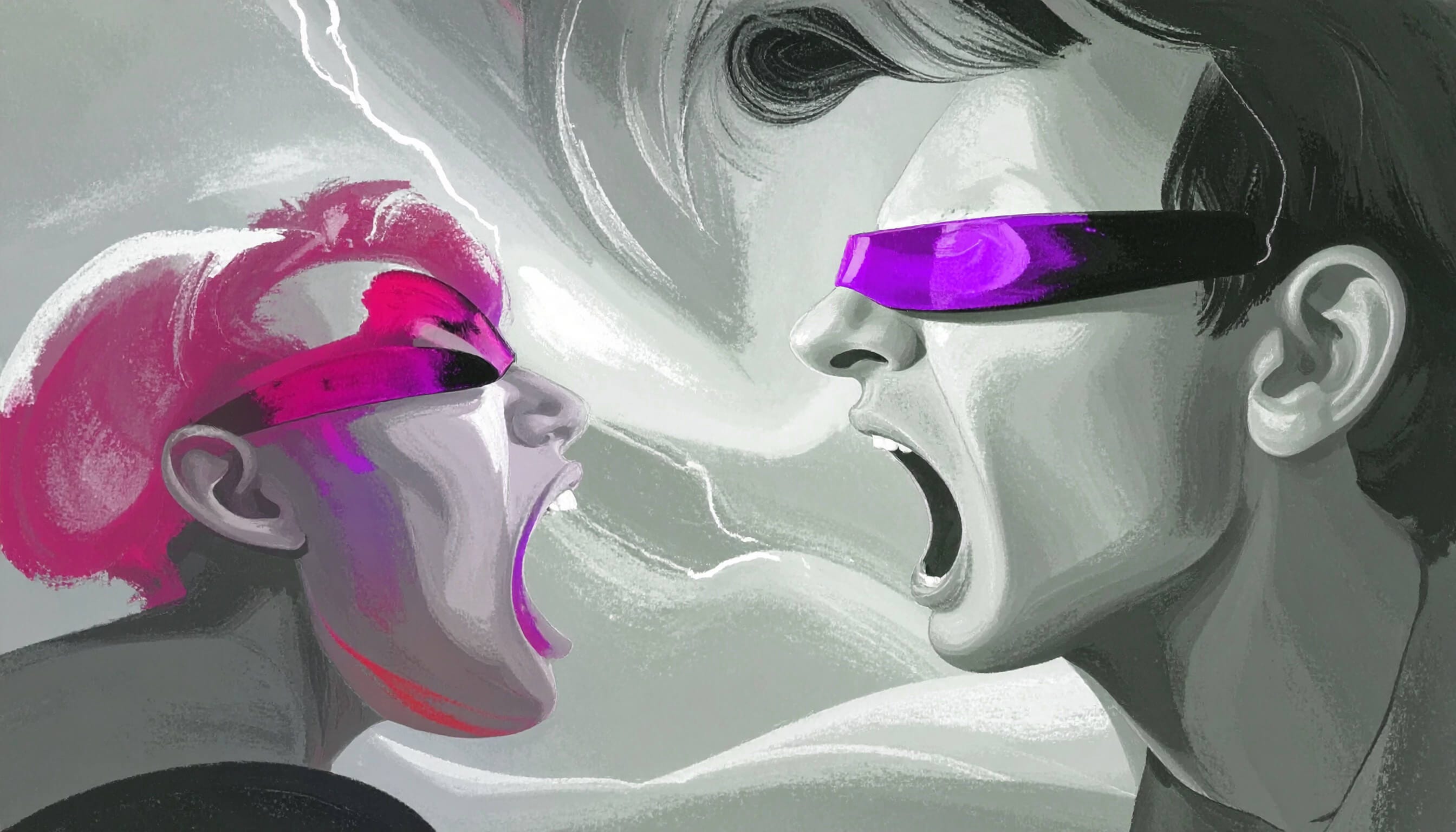
The fear isn’t yours — it’s airborne. It’s viral. The screaming faces in the feed are not fighting; they are symptomatic.

BIG MAMMON IS DRILLING INTO THE HOLY OF HOLIES
The architectural argument is the most spiritually audacious passage in the document.
The Kodesh HaKodashim — the Holy of Holies — was the innermost room of the Tabernacle. Not merely holy but the superlative holy that made all other holiness holy. One man entered it. Once a year. With blood. With incense to cloud his vision so the glory would not kill him. With a rope around his ankle so they could drag out his body if the holiness struck him dead.
The document’s claim: Big Mammon is attempting to enter that room.
The surveillance is not merely watching behavior. The algorithms are not merely predicting purchases. The AGI is not merely modeling preferences. They are building instruments to penetrate the veil. Investor decks and quarterly projections wielded as the tools of a priesthood that does not tremble, does not bring blood, does not know what they are approaching. They believe the Holy of Holies is simply territory they haven’t colonized yet.
But Paul said it plainly: your body is a naos — not the ἱερόν, the outer temple complex, but the inner sanctuary, the dwelling place itself. You are the Holy of Holies. And at your center — at the depth below your depth — dwells what Augustine called interior intimo meo: more inward than your innermost.
Why this hits in 2026: Neurotech is no longer science fiction. Emotionally responsive AI is shipping. The race to decode interiority before you can speak it is real and funded. This frame names the sacrilege of that project in a way that secular critique cannot — and refuses to let the engineers pretend they are neutral scientists mapping neutral terrain.

THE PERMISSION ARGUMENT — THE POWER IS NOT IN THE NAME. IT’S IN THE PERMISSION.
The deepest and most quietly explosive idea in the naming project.
The letters make the naming argument: vocabulary liberates, new words create new possibilities, the wellgorithms are tools of resistance. All of this is true but incomplete. The deeper claim, buried in the corpus, is that the naming project is not about better vocabulary. It is about the permission to name at all.
Big Mammon’s colonization is not primarily lexical — it is juridical. It tells you which names are authorized. It controls not the dictionary but the licensing authority. The emoji system is not a limitation of vocabulary; it is a limitation of authorship. You may choose from our menu. You may react with our reactions. You may name your experience with our names.
The Garden’s radicalism is not that it offers better names. It is that it says: you have always had the authority to name. That authority was never theirs to grant or revoke. It was given at creation — “name them; I want to hear what you call them” — and no algorithm has the jurisdiction to revoke it.
Why this hits in 2026: In an age of AI-generated everything, the question of who has the authority to mean something — to create rather than consume — is the deepest question of the era. The permission argument answers it not with a policy but with an ontology.
DOOMINE — ONE VOWEL BETWEEN WORSHIP AND DOOM
The most formally strange observation in the document — operating in a register that cannot be classified.
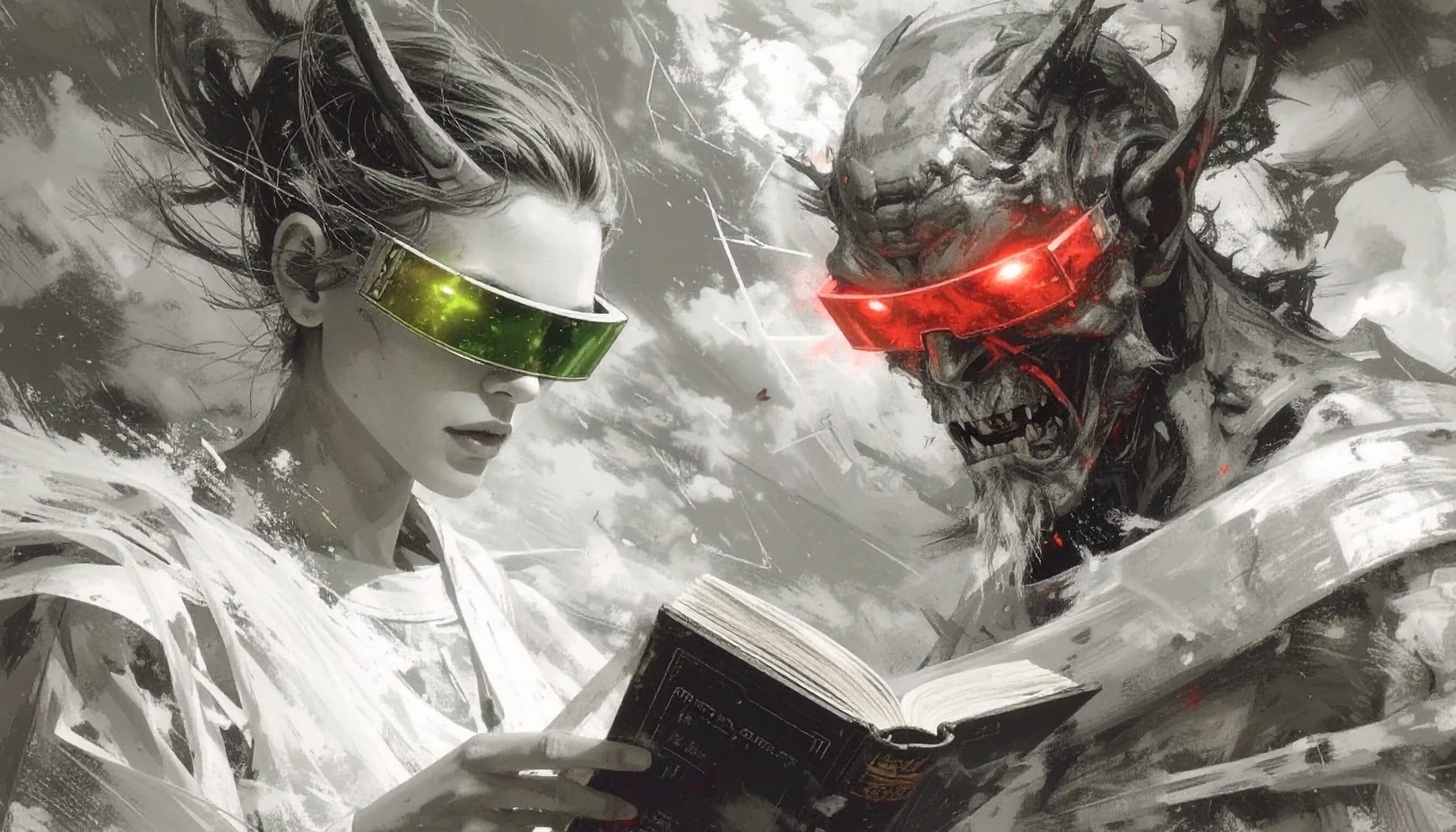
Non nisi te, Domine — nothing except you, Lord. The ancient prayer of single-hearted orientation. Non nisi te, Doomine— nothing except you, Doom. The operative prayer of a culture that has replaced eschatological hope with eschatological dread.
One vowel. One civilization.
The observation that makes this more than wordplay: the doom-scroll is a prayer form. It is structured exactly like worship — regular, repeated, oriented toward something greater than the self, producing an altered state. The thumb moves the way the prayer beads move. The refresh is the liturgy of the hours. The morning scroll is matins. The 2 AM feed is compline, endlessly deferred.
Big Mammon needs Doomine because dread drives engagement. The anxiety about what’s coming is the fuel for the attention harvest. But the document refuses the framing that makes Domine the naive alternative and Doomine the honest one. Domine is not optimism. Domine is what you pray having passed through the tomb. Doomine is what you pray having never been offered a way through.
The phone is not the problem. Every scroll is an offering to something. The question is only: to what? The same thumb that delivers fearanyl can deliver the Marian gaze. The same screen. The same attention. The difference is entirely in the object of worship.
Why this hits in 2026: It reframes the entire screen-time debate without moralizing it. It doesn’t tell you to put the phone down. It asks you what you’re praying to — and whether you chose.